05.12.2024
Doctors of the BSMU Clinic of the Ministry of Health of Russia performed an operation to treat urinary incontinence using their own unique development
Urologists of the BSMU Clinic of the Ministry of Health of Russia for the first time performed an operation to treat stress urinary incontinence in women using a combined allogeneic-polypropylene sling, which was developed by medical scientists of the BSMU of the Ministry of Health of Russia. The medical device is a combined (allogeneic-propylene) sling. (* Patent invention: Combined sling prosthesis for the treatment of stress urinary incontinence in women).
"For many years we have been working on the introduction into various clinical practice of the famous invention of Professor Ernst Rifgatovich Muldashev and a team of scientists - advanced transplantation technology Alloplant, which was created within the framework of the world famous center of the same name. Basically, these technologies were developed for ophthalmology - for eye, and reconstructive plastic surgery. Today we are expanding the area of application of Alloplant and with our Moscow colleagues, with urologists and gynecologists, we have developed a new medical product for the treatment of urinary incontinence. This is an import-substituting technology. Which today we bring to the market, "comments the rector of the Bashkir State Medical University of the Ministry of Health of Russia, Academician of the Russian Academy of Sciences, Professor Valentin Nikolaevich Pavlov.
Women face the problem of urinary incontinence more often than men due to the peculiarities of physiology. And in most cases, a simple surgical intervention in the form of a sling operation, which lasts no more than 30 minutes, helps to forget about the problem, thereby improving the quality of life of patients.
"The invention of our scientists avoids complications from synthetic prostheses, which are still used in Russia. This is an advanced innovative development of our scientists, which has a great future. Including today our colleagues from the United Arab Emirates are working with us. And they are very interested in this technology being available to urologists and gynecologists all over the world as soon as possible, "Rector of the Bashkir State Medical University of the Ministry of Health of Russia, Academician of the Russian Academy of Sciences, Professor Valentin Nikolaevich Pavlov.
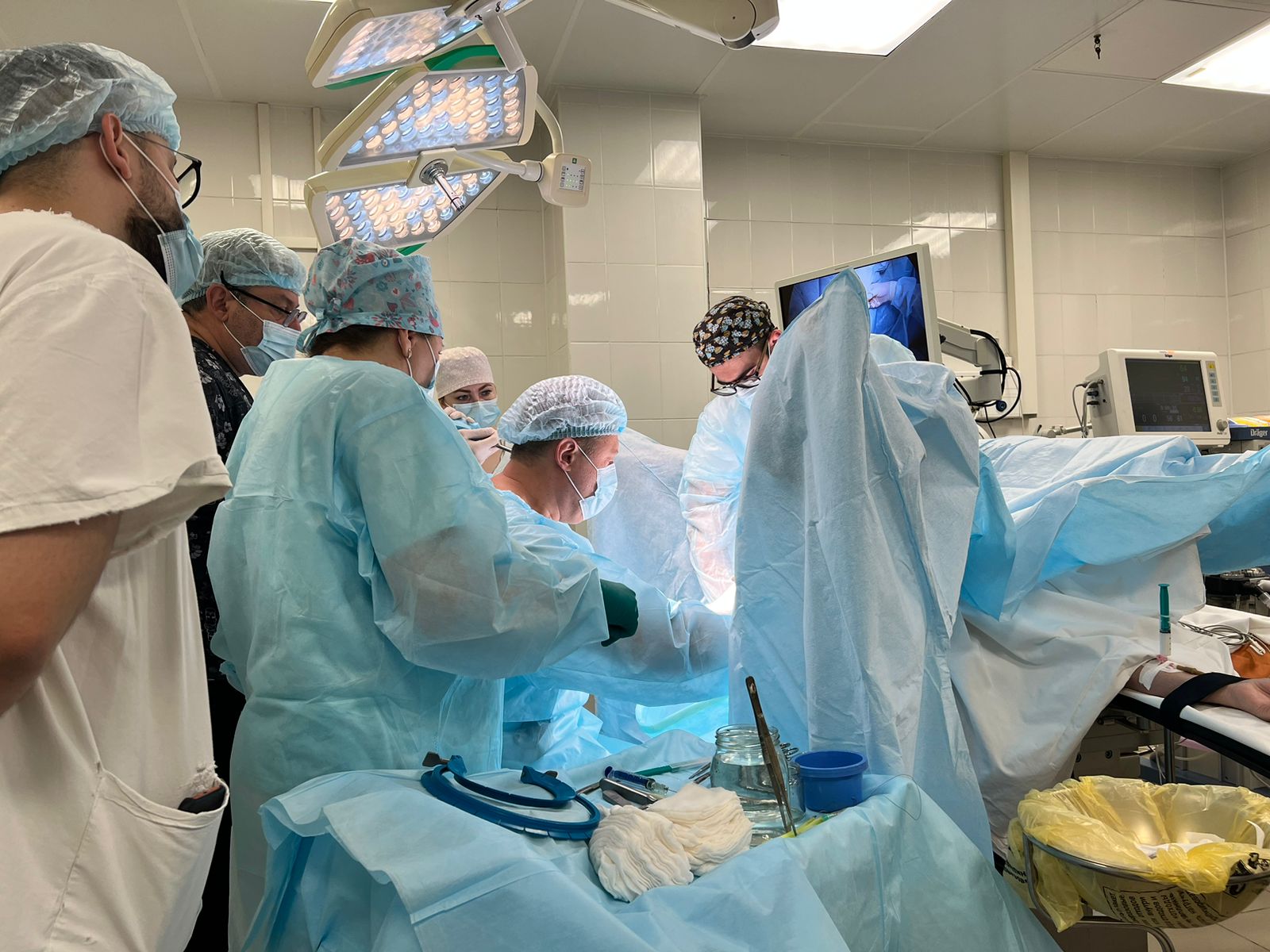
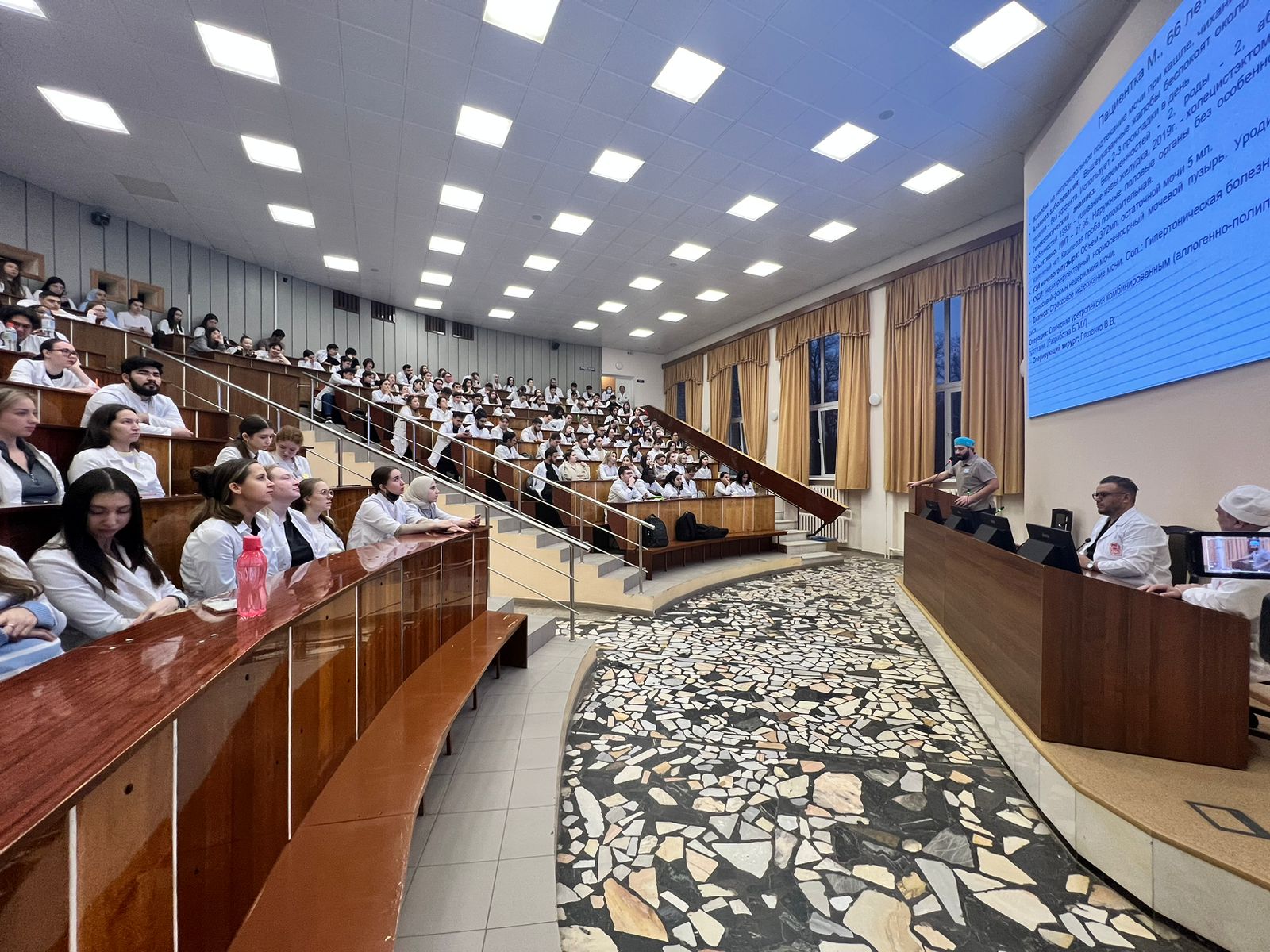
Surgical intervention was carried out in the operating room of the BSMU Clinic in the format of "live surgery," more than 200 students and residents of the Bashkir State Medical University online monitored the actions of the surgeon and disassembled the operation in stages.
The operation was performed under the guidance of invited expert Vladimir Vladimirovich Lyashenko (Ph.D., head of the urology department of the Alexander - Marinsky Regional Clinical Hospital in Astrakhan.):
"This minimally invasive operation came to Russia in the 2000s. Its peculiarity was that, unfortunately, only imported manufacturers were then represented on the market. But starting from 2006-2007, we began to make our material, domestic. And propylene sling should be installed using domestic equipment. All this, of course, makes this operation cheaper and more affordable. But our colleagues from Ufa went further. BSMU scientists have modernized this mesh by adding an alloplant there.
In order to install a natural implant in the most vulnerable zone of contact of the synthetic implant with the tissues of the urethra and vagina. This will eliminate complications in the form of erosion of prostheses, new episodes of overactive bladder, and generally improve the quality of life of active women. The device is patented, is now being manufactured at a Russian plant and there are already several applications for its purchase throughout Russia, including abroad. Interest in purchasing a medical product is high because this unique technique gives the absence of an immune response and minimal possibilities of rejection in the postoperative period. "
Doctors promise a long-term effect from a minimally invasive operation, given that the age of the patient who undergoes this operation is on average 50 years, then, one might say, the patient begins a lifelong remission.
"For many years we have been working on the introduction into various clinical practice of the famous invention of Professor Ernst Rifgatovich Muldashev and a team of scientists - advanced transplantation technology Alloplant, which was created within the framework of the world famous center of the same name. Basically, these technologies were developed for ophthalmology - for eye, and reconstructive plastic surgery. Today we are expanding the area of application of Alloplant and with our Moscow colleagues, with urologists and gynecologists, we have developed a new medical product for the treatment of urinary incontinence. This is an import-substituting technology. Which today we bring to the market, "comments the rector of the Bashkir State Medical University of the Ministry of Health of Russia, Academician of the Russian Academy of Sciences, Professor Valentin Nikolaevich Pavlov.
Women face the problem of urinary incontinence more often than men due to the peculiarities of physiology. And in most cases, a simple surgical intervention in the form of a sling operation, which lasts no more than 30 minutes, helps to forget about the problem, thereby improving the quality of life of patients.
"The invention of our scientists avoids complications from synthetic prostheses, which are still used in Russia. This is an advanced innovative development of our scientists, which has a great future. Including today our colleagues from the United Arab Emirates are working with us. And they are very interested in this technology being available to urologists and gynecologists all over the world as soon as possible, "Rector of the Bashkir State Medical University of the Ministry of Health of Russia, Academician of the Russian Academy of Sciences, Professor Valentin Nikolaevich Pavlov.
Surgical intervention was carried out in the operating room of the BSMU Clinic in the format of "live surgery," more than 200 students and residents of the Bashkir State Medical University online monitored the actions of the surgeon and disassembled the operation in stages.
The operation was performed under the guidance of invited expert Vladimir Vladimirovich Lyashenko (Ph.D., head of the urology department of the Alexander - Marinsky Regional Clinical Hospital in Astrakhan.):
"This minimally invasive operation came to Russia in the 2000s. Its peculiarity was that, unfortunately, only imported manufacturers were then represented on the market. But starting from 2006-2007, we began to make our material, domestic. And propylene sling should be installed using domestic equipment. All this, of course, makes this operation cheaper and more affordable. But our colleagues from Ufa went further. BSMU scientists have modernized this mesh by adding an alloplant there.
In order to install a natural implant in the most vulnerable zone of contact of the synthetic implant with the tissues of the urethra and vagina. This will eliminate complications in the form of erosion of prostheses, new episodes of overactive bladder, and generally improve the quality of life of active women. The device is patented, is now being manufactured at a Russian plant and there are already several applications for its purchase throughout Russia, including abroad. Interest in purchasing a medical product is high because this unique technique gives the absence of an immune response and minimal possibilities of rejection in the postoperative period. "
Doctors promise a long-term effect from a minimally invasive operation, given that the age of the patient who undergoes this operation is on average 50 years, then, one might say, the patient begins a lifelong remission.
Photo gallery