23.02.2025
The Center for Robotic Surgery of the BSMU Clinic has been guarding the health of citizens of Bashkortostan for seven years
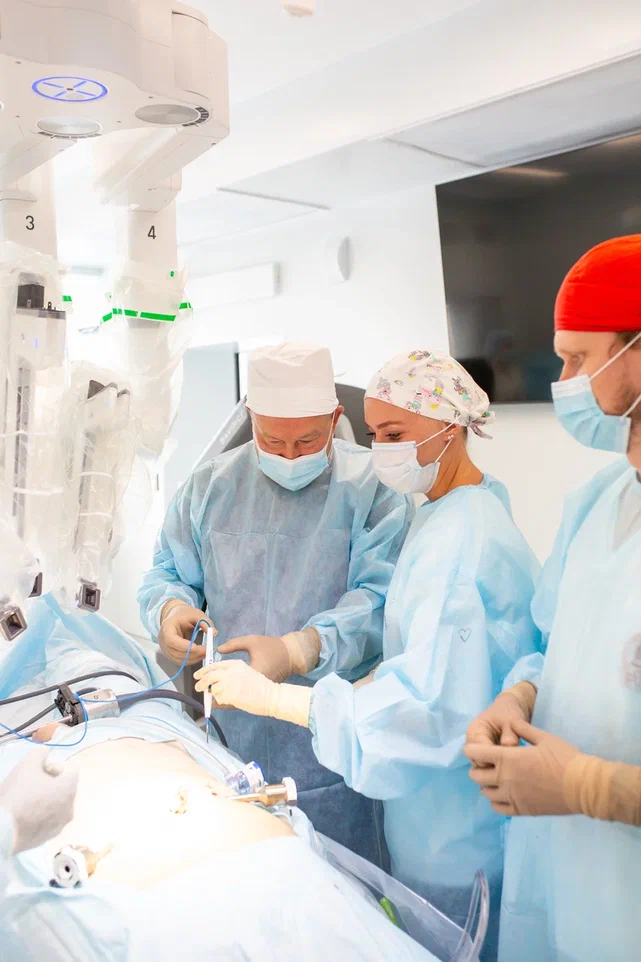
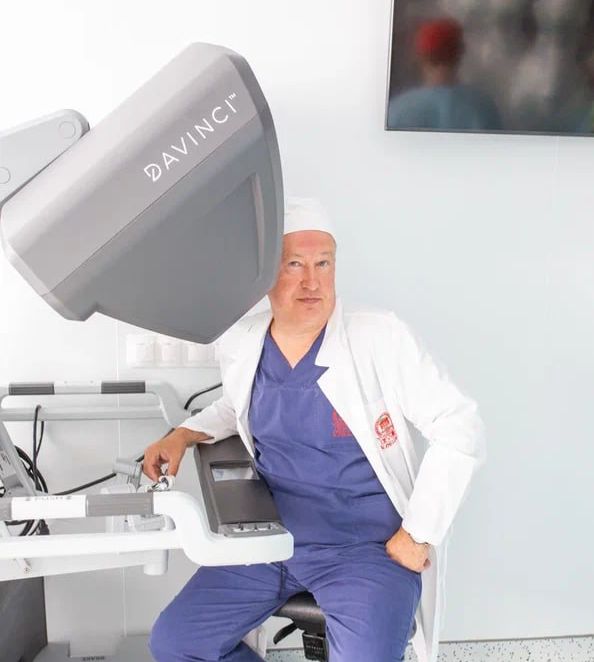
Seven years ago, the first and only Robotic Surgery Center in the Volga Federal District was opened at the BSMU Clinic. In 2018, the only Da Vinci Si robotic system began operating at the center.
Robotic surgery has a number of advantages over laparoscopic and "open" surgery: it is low invasiveness, precision, accuracy, 3D imaging, which creates the effect of "presence" in the operating field, the absence of physiological tremor, that is, hand tremors, during manipulations, which cannot be ruled out when performing other types of interventions.
The Center for Robotic Surgery of the Bashkir State Medical University of the Ministry of Health of Russia is also unique in that operations are performed for patients free of charge, according to the compulsory medical insurance system. Doctors of the BSMU Clinic aid residents of both the Republic of Bashkortostan and other regions.
Rector of BSMU, Academician of the Russian Academy of Sciences, Doctor of Medical Sciences, Professor Valentin Nikolaevich Pavlov is the founder of the Center for Robotic Surgery of the BSMU Clinic and an expert in conducting robot-assisted operations. Master classes in the format of live surgery, conducted by Valentin Nikolaevich and his team, are broadcast at major medical conferences and congresses throughout Russia and abroad.
"At the BSMU clinic, scientific directions are underway to develop the most promising and demanded type of surgical interventions today - robotic surgery. Our robotic center was opened on February 23, exactly 7 years ago. First, and then the second DaVinci system appeared, we expanded robotic technologies. Today we see that our center is in demand. Moreover, we have become one of the congress sites for the development of robotic surgery. We broadcast operations that are carried out in our robotic center not only throughout Russia. Our colleagues successfully held large world congresses in Turkey and India with the participation of our specialists. Also, colleagues from other countries come to us to learn our technologies of robotic surgery.
Many are interested in the question - will the robot replace a person? Partly, yes. But still, all decisions are made by man, and it will never happen that the robot's intelligence surpasses human intelligence. A robot is only a means of continuing human intelligence for the benefit of the patient, " commented the rector of the Bashkir State Medical University of the Ministry of Health of Russia, academician of the Russian Academy of Sciences, Professor Valentin Nikolaevich Pavlov.
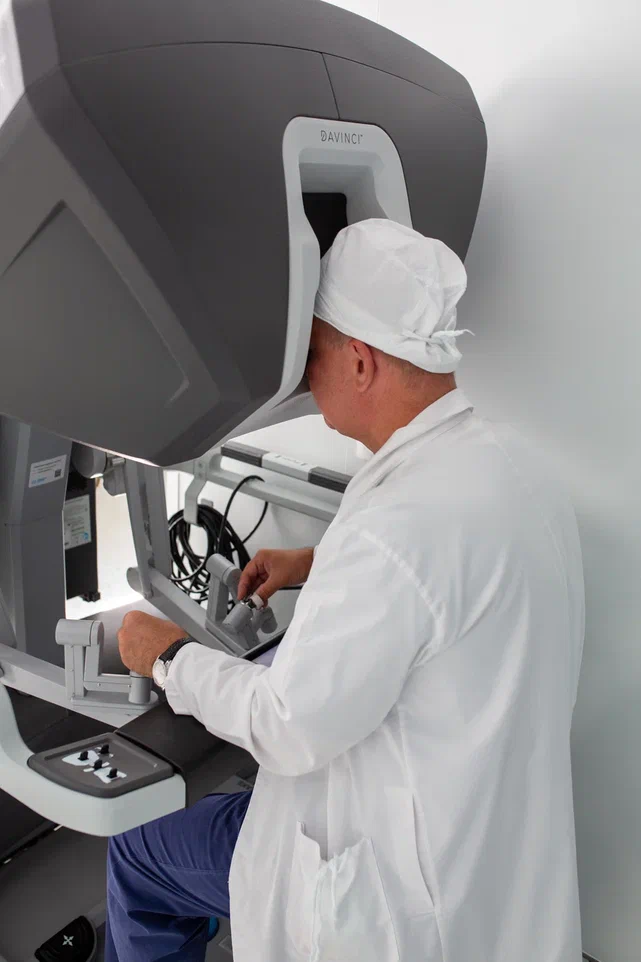
The Da Vinci surgical system is a sophisticated robotic platform that empowers the surgeon. The system consists of three consoles: the surgeon's console, the patient's console, and the vision console. The surgeon's console is the control panel of the entire system and the operator's workplace, which controls the three manipulator tools and the patient's trolley camera using two joysticks and foot pedals.
The main plus of robotic surgery is minimal trauma to the surrounding tissues. This reduces the risk of blood loss and pain after surgery, as well as:
- reducing the risk of complications;
- no need for a special postoperative corset;
- minimal scars and scars (incisions do not exceed 1 cm);
- short-term rehabilitation;
- quick return to the usual way of life;
- high quality of treatment.
The Center for Robotic Surgery of the BSMU Clinic employs: academician of the Russian Academy of Sciences, professors, doctors and candidates of medical sciences. Over the 7 years of its existence, more than 4,000 thousand high-tech operations have been performed in the center, and this is not the limit. The development of robotic surgery is a long-term trend:the University is developing large scientific programs in this area.
The number of robotic operations performed by the center's doctors is increasing every year. If in the first year of work at the Center for Robotic Surgery of the BSMU Clinic, 200 operations were performed, in 2024 the surgeons operated on about 1000 patients: 421 on the Da Vinci Si robot, 526 on the Da Vinci Xi robotic installation and 45 on Cuvis Joint.
The acquisition of a new generation Da Vinci Xi robotic installation in 2022 helped to increase the number and quality of operations - today this system is the most modern and advanced.
The areas of application of Da Vinci technology are very extensive and include abdominal, thoracic and colorectal surgery, gynecology and urology, and vascular surgery.
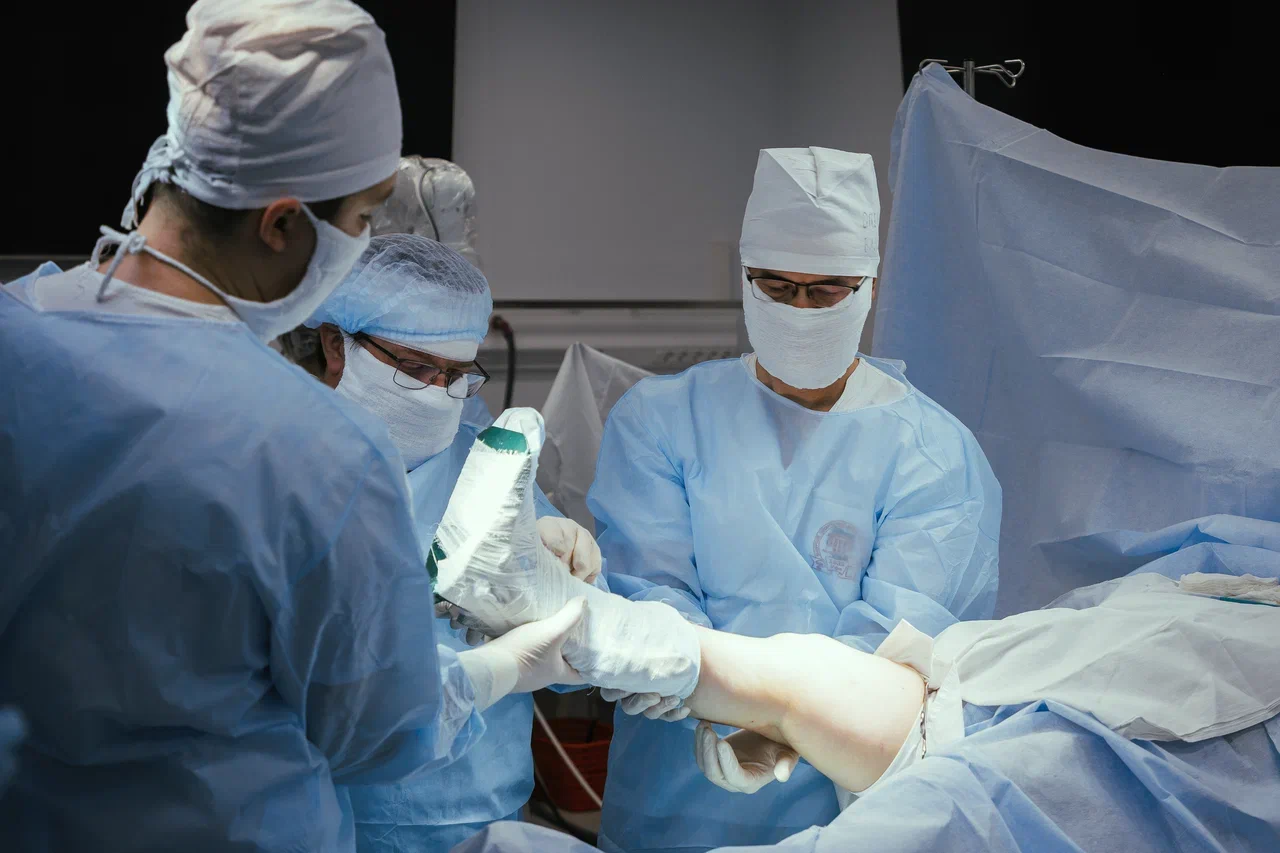
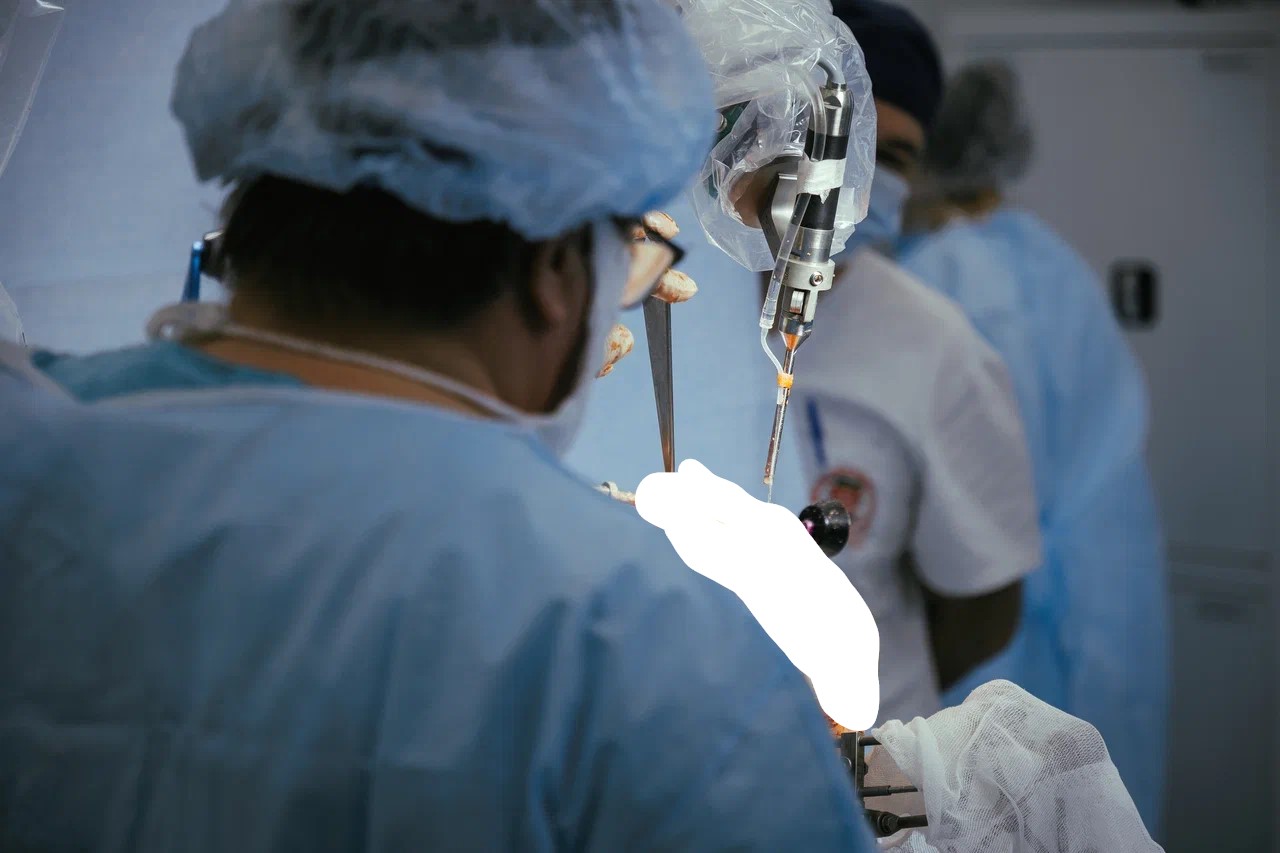
Progress does not stand still, and in 2024 at the Center for Robotic Surgery, due to the participation of the university in the federal development program "Priority-2030," a third robotic installation appeared - a robot traumatologist - Cuvis Joint.
Cuvis Joint is a surgical joint replacement robot. The main advantage of the new robotic installation is the exceptional accuracy of the operation.
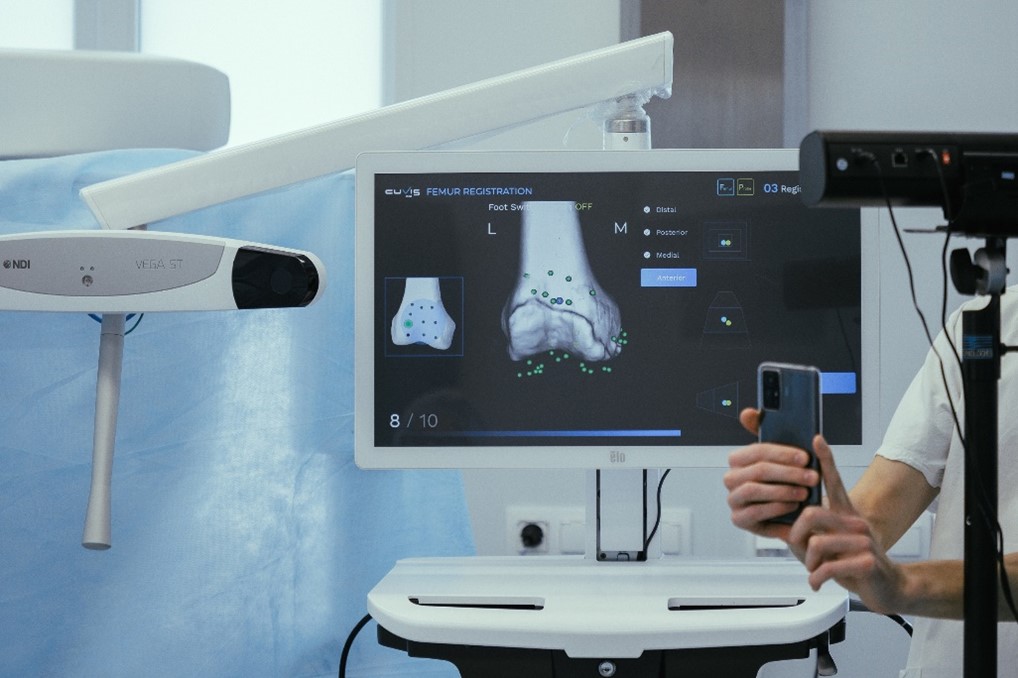
The robotic installation allows for complete accuracy in the preparation of articular surfaces and bone canals for optimal implantation of the knee prosthesis, considering the unique features of each organism. The robot surgeon works on computer images himself. Mistakes and the human factor are excluded.
"The main principles of the robot are navigation, power control and optimal balance. All this reduces the time of surgical intervention. A robot surgeon is a technology of the sixth technological order. That is why the surgeon's activity now is not only intelligence and knowledge, it is the work of a machine, the art of modern technologies, " said Bulat Minasov, professor, doctor of medical sciences, head of the department of traumatology and orthopedics with an IDPO course, traumatologist - orthopedist at the BSMU clinic.
Robotic knee replacement surgery consists of several stages:
• creation of a joint model based on a 3D-model based on computed tomography results. A computer program allows you to determine the optimal resection and location of milling holes in the bones, which ensures ideal positioning of the implant for a specific patient;
• knee replacement surgery. The surgeon accesses the joint and combines its landmarks with the key points laid down in the robot's computer program. Then, the Cuvis Joint robotic system with submillimeter accuracy implements a plan for resection of the affected tissues and creates channels for attaching the joint endoprosthesis. Then the implant is installed and its functioning is tested. The operation is completed by suturing the soft tissues.
Advantages of the system:
- significantly reduces the duration of the operation;
- ruled out unintentional tissue damage;
- ideal conditions are provided for maximum long-term and high-quality operation of the endoprosthesis;
- reducing the volume of operative trauma by excessively removing only damaged tissues and reducing the size of the operative access sufficient for robot manipulators, as opposed to conventional surgery;
- maximally preserved ligaments, nerves, muscles, vessels of the area concerned;
- postoperative recovery is faster and less painful;
- reduced probability of postoperative complications;
- blood loss is significantly reduced and, therefore, transfusion is less necessary;
- a small, compared to the classic, soft tissue incision provides a better cosmetic effect.